

Czech Silurian Paleontological Site
Gaptoliths, some very curious fossils
Graptolites, discover these small beings
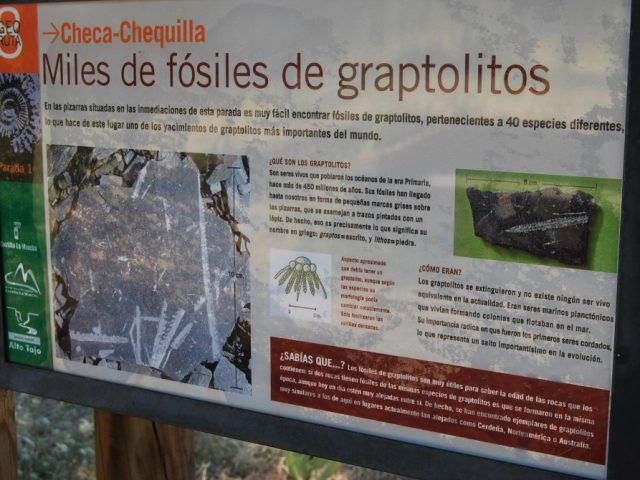
This site is one of the most important in the world in terms of graptolite fossils. Graptolites are already extinct beings that present here a continuous evolutionary series of more than 40 species. These primitive chordates had a planktonic marine character, which gave them a wide geographical distribution1. The studies carried out at this site have allowed the description of new species of graptolites. Furthermore, in association with other genera, these fossils appear throughout the globe, which makes them very useful for establishing precise dating worldwide.
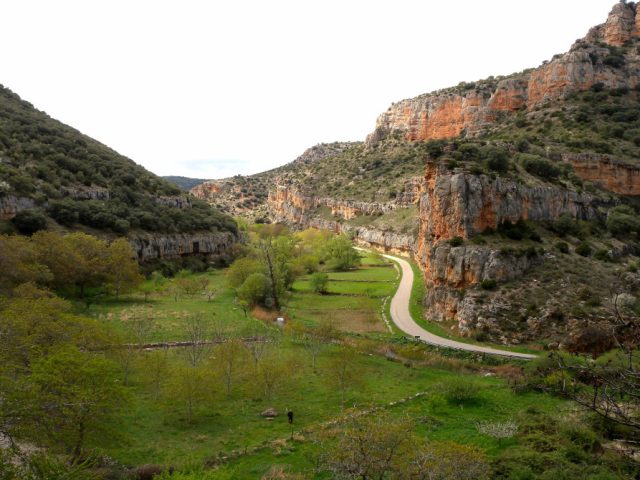
The graptolite deposit is located in Czech, Guadalajara. In this place, you can find graptolite fossils captured in the slates in the area around the experimental area of La Tejera. These fossils are ancient marine organisms that lived approximately 430 million years ago.
Graptolites were very abundant in the oceans of the Early Paleozoic. Their fossils have come down to us as small gray marks on slates, resembling lines painted with chalk. In fact, its name in Greek means precisely this: “graptos” means “writing” and “litos” means “stone.” Graptolites evolved rapidly, so their fossils are different from those of earlier and later periods. By identifying the evolutionary sequence of graptolite fossils, it can be established whether one rock is older than another based on the fossil species it contains. In this way, two rocks with the same graptolite fossils will have the same age, even if today they are very far from each other.
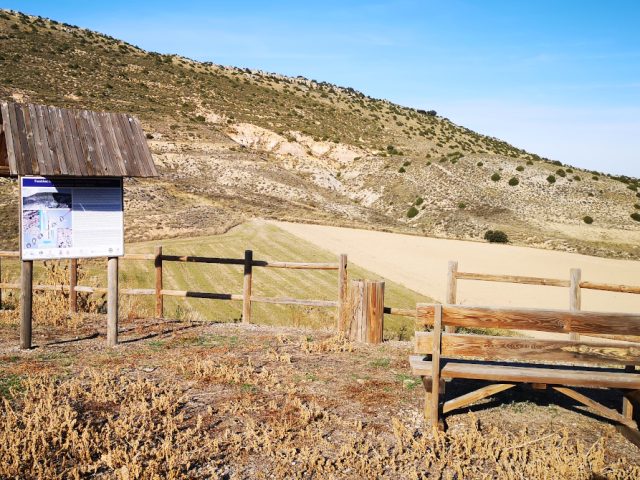
The Checa site has international relevance and is visited by specialists from all over the world. The risk of losing specimens relevant to science was very high, so it was decided to fence the most important area of the site. Access is limited exclusively to scientific researchers, although you only have to look at the blackboards that remain around La Tejera...


 English (UK)
  Español