
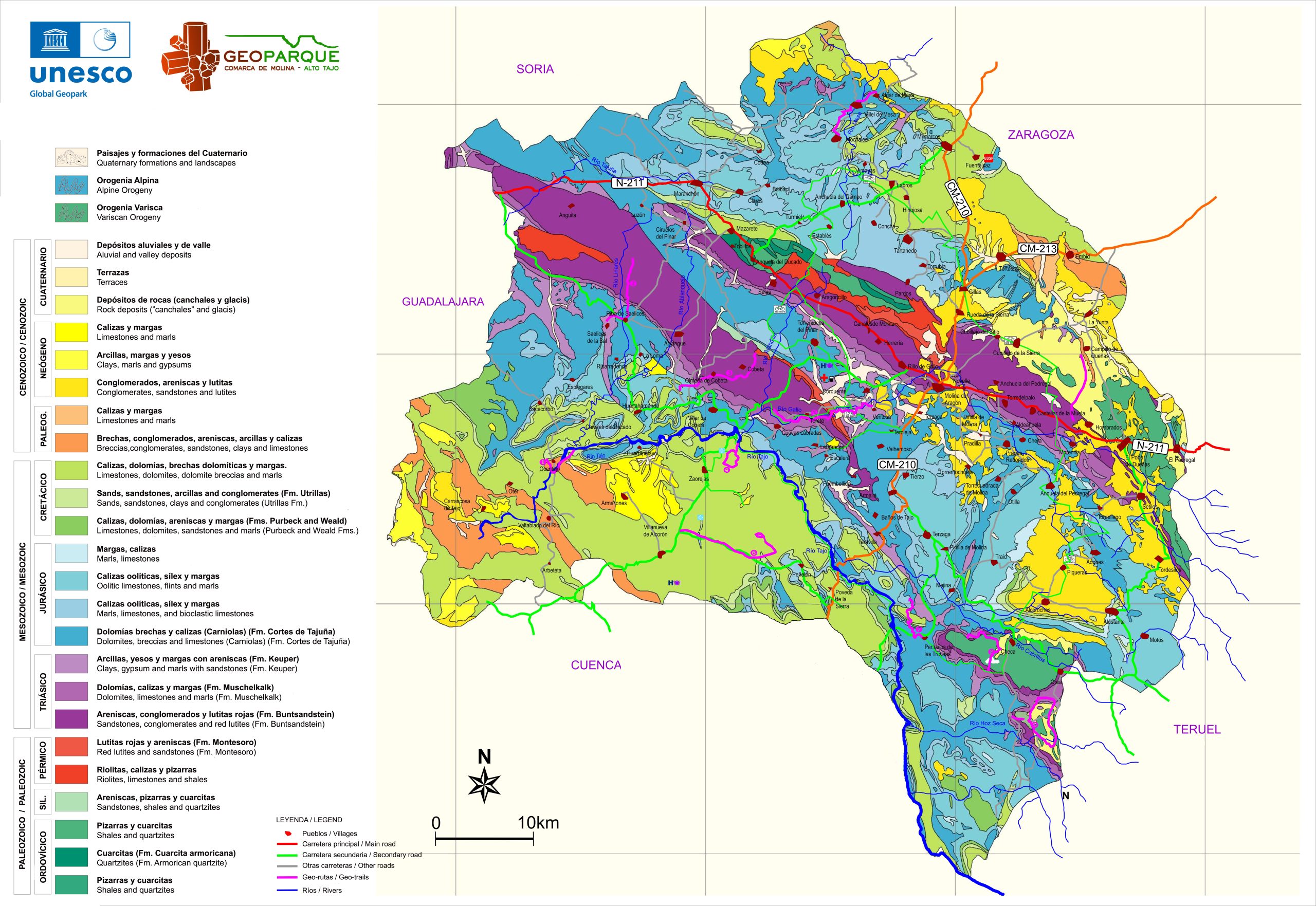
A GEOLOGICAL HISTORY OF MORE THAN 450 MILLION YEARS
The recording of the geological history of the Earth is one of the most notable aspects of this geopark. The extensive network of valleys and gorges excavated in the mountains and moors reveal a multitude of slopes in which the strata formed throughout the history of the Earth appear in excellent conditions for observation and study.
The oldest rocks that appear were formed at the beginning of the Primary or Paleozoic Era, they correspond to the Cambrian period, they are slates and quartzites with an age of about 480 million years. Its origin is found in marine and coastal sediments of the ancient continent Gondwana and nearby islands.
Similar rocks formed during the Ordovician and Silurian periods emerge in the cores of the mountains. The existence of a stratum of limestone rocks from the Ordovician period, very interesting for its metallic mineralization, is notable.
The above materials contain signs of the intense folding suffered during the Variscan orogeny, in the form of folds and metamorphism.
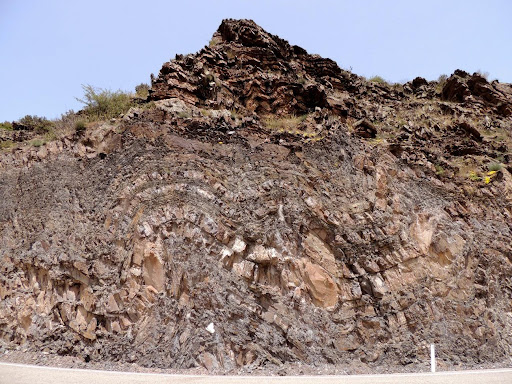
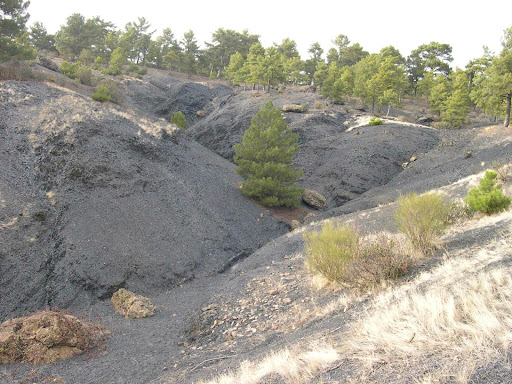
Silurian
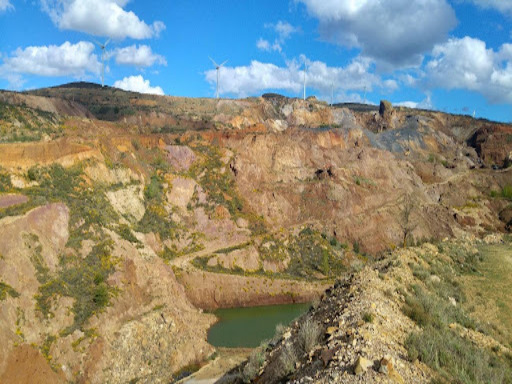
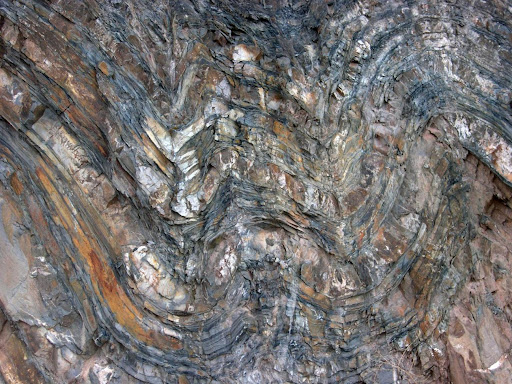
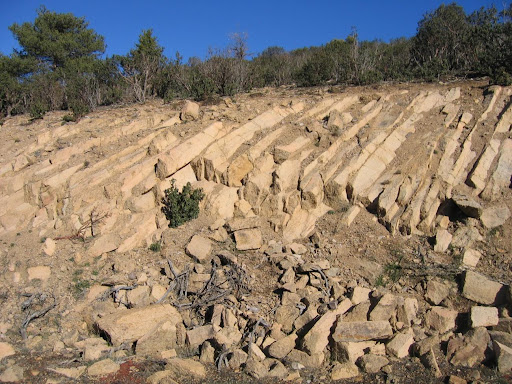
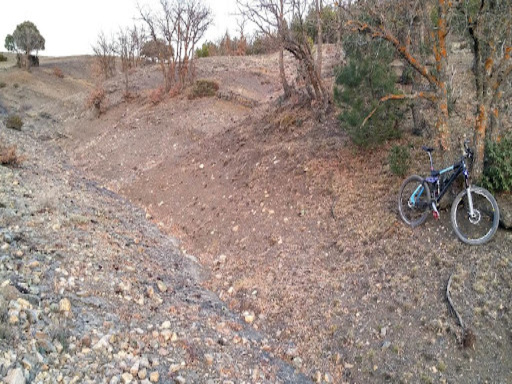
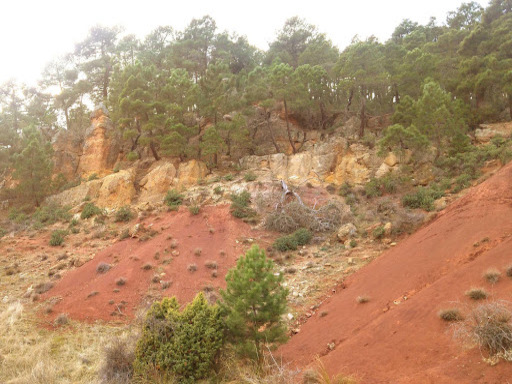
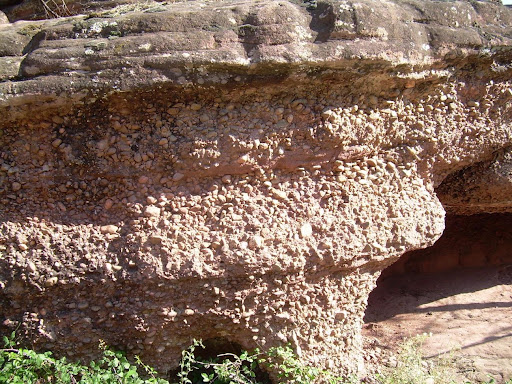
The Permian period is represented by rocks that show us the variety of environments that occurred in Pangea at the end of the Primary Era. They are rocks of volcanic, lacustrine and detrital origin that testify to the evolution from a humid climate to the conditions of extreme aridity that occurred at the end of the Primary Era.
Materials also appear from practically the entire Secondary Era: Triassic, Jurassic and Cretaceous that allow us to study in detail the fragmentation process of Pangea in the current continents and the multiple sedimentation environments and ecosystems that occurred.
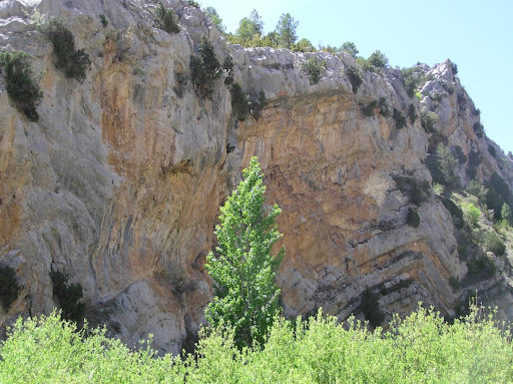
The Alpine orogeny left its mark on the previous strata in the form of the folds and fractures that dot this territory. Likewise, as this occurred, during the Cenozoic period, new sediments and rocks were deposited in rivers and lakes, which have allowed us to understand the environments that existed and the fauna that populated them.
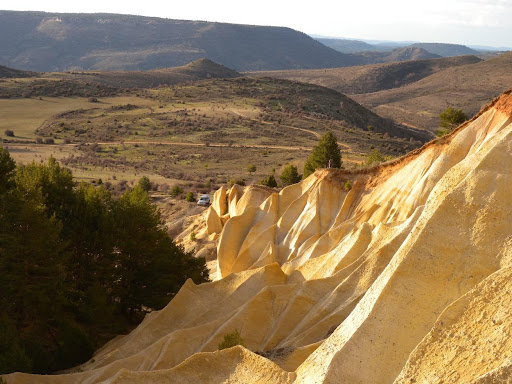
The glaciation of the recent Quaternary period gave its definitive appearance to the Geopark landscape, creating the current river network, its valleys, gorges, periglacial formations, karsts, countryside, moles and moors.
 English (UK)
  Español