
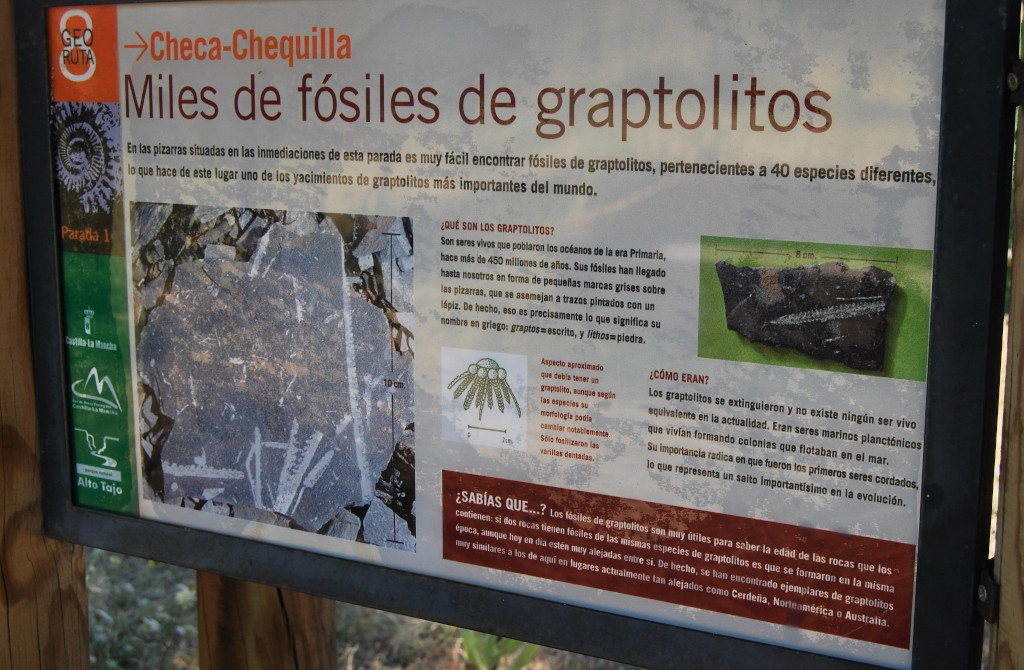
Graptolite Site
Graptolites are the fossil record of planktonic beings that were widely spread throughout the Earth's oceans, at the beginning of the Silurian period more than 400 million years ago. The “La Tejera” site is extraordinarily important because it contains a continuous succession of sediments deposited without interruption, in which the changes suffered in their features by these animals over several tens of millions of years have been identified.
They have been studied for decades because the quality of this site has made it possible to characterize up to 60 species of these, now extinct, beings from the chordate family and to establish their temporal distribution, which allows
use them as "guide fossils", that is, make precise chronological dating of rocks found anywhere on the planet, based on their content in these fossils.
What is normally preserved fossilized is the skeleton of a colony of them called a rhabdosome, this, originally, was a substance made up of collagen tissues, similar to our tendons.
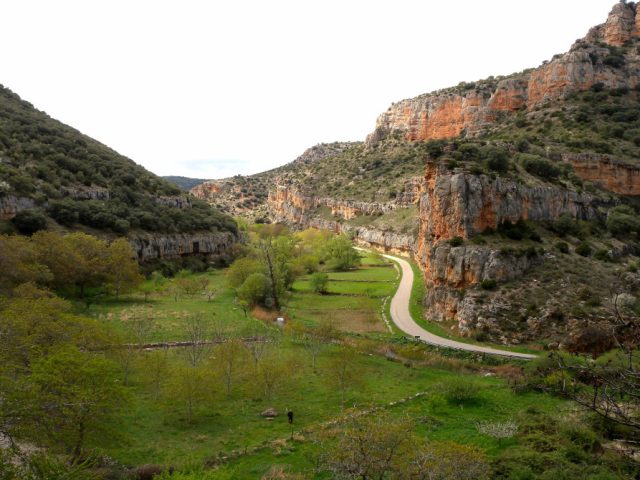
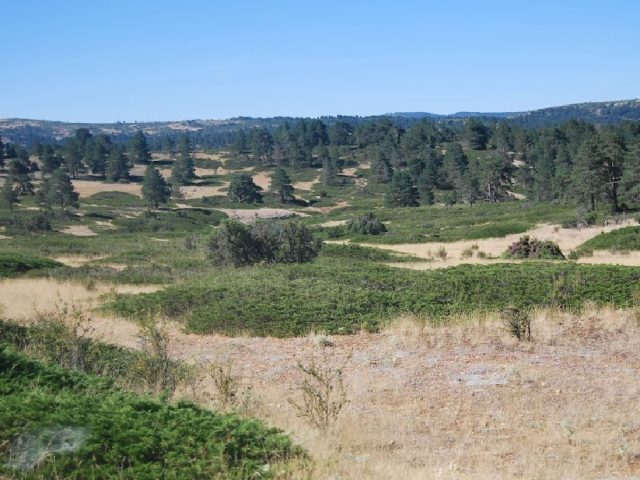
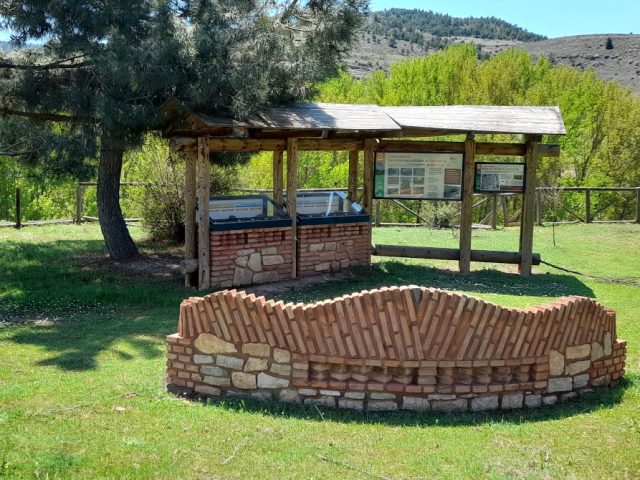
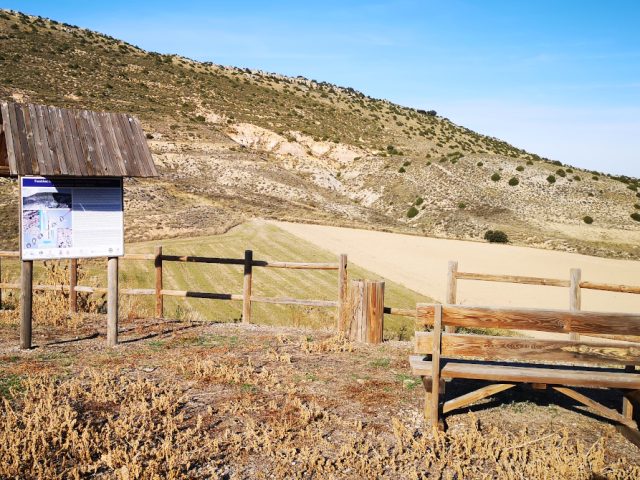
How to get: They are abundant in the black slates around the “La Tejera” interpretive area at stop number 1 of the Georoute nº8 of the Alto Tajo Natural Park.
Observations: It has been necessary to preserve the area where the studies of these fossils are carried out with a fence, to facilitate scientific work, by avoiding modifications to the substrate due to activities unrelated to the work of paleontologists. However, for the amateur, they appear specimens of the same or higher quality in the surrounding area.
Please follow the necessary precautions when walking on the side of the road.

 English (UK)
  Español