Fuentelsaz stratotype
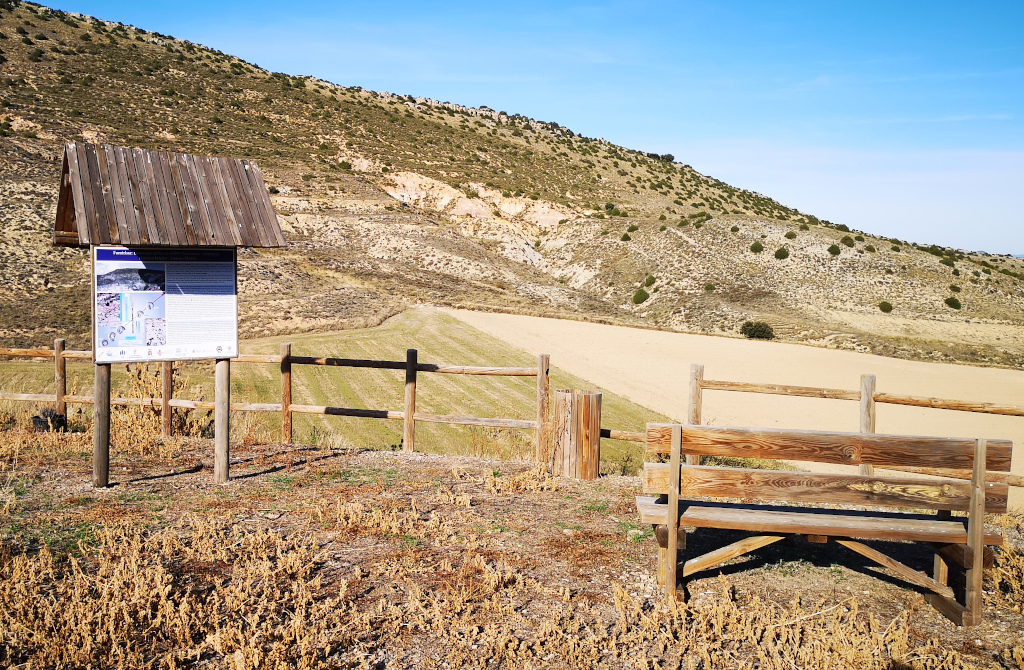
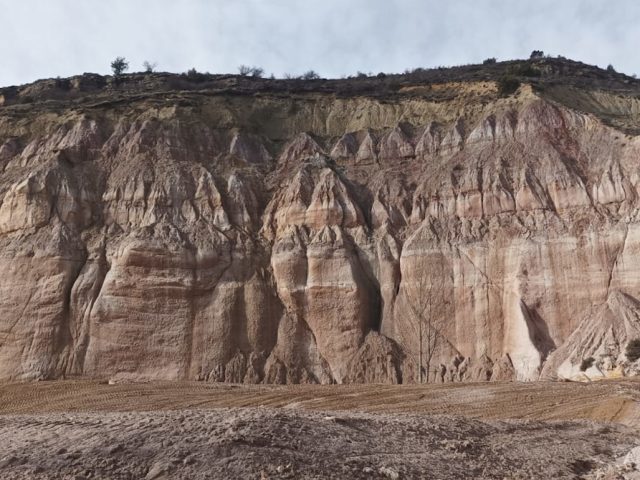
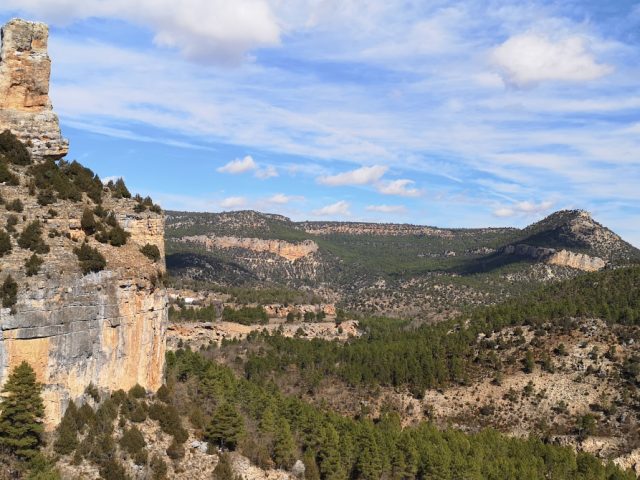
Description: The Fuentelsaz section, located in the NE region of the Señorío de Molina, is considered the most continuous record worldwide of the transit between the Lower and Middle Jurassic, around 175 million years ago. Geologists, to reconstruct the history of the Earth that dates back 4.6 billion years, look for places where continuous and uniform sedimentation has been recorded in certain periods of time.
These places, known as stratotypes, are used as patterns or models to compare with other places where the record is not as complete or has not been preserved in as much detail. When a stratotype shows a global process, it is evaluated by the International Union of Geological Sciences (IUGS), which selects the most representative on a global scale. They are then called GSSP (acronym of their name in English: Global boundary Stratotype Section and Point), of which in Spain there are only 3, one of them Fuentelsaz, which was declared in 2000 promoted by researchers from the Complutense University from Madrid.
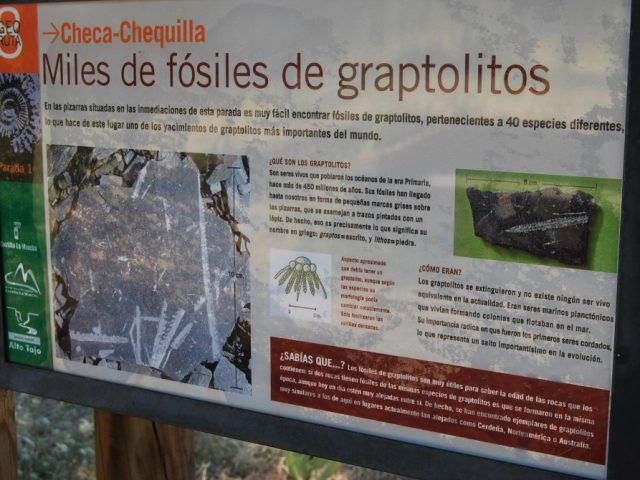
The Fuentelsaz section shows great continuity of a set of sediments formed at the bottom of a shallow sea and warm waters that covered this region in the mid-Jurassic. In these sediments you can find fossils of ammonoids, brachiopods, bivalves, foraminifera, ostracods, calcareous nannofossils and spores. These fossils provide valuable information about what the marine environment in which they lived was like (depth, water temperature, turbidity, etc.) and about the diversity of these ancient marine ecosystems. Along with the fossils, other geological studies allow these sediments to be described in great detail for their possible correlation with others formed at the same time in other places in the world.
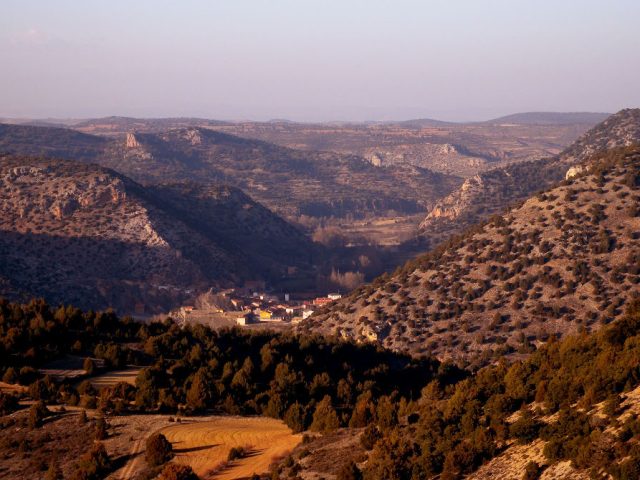
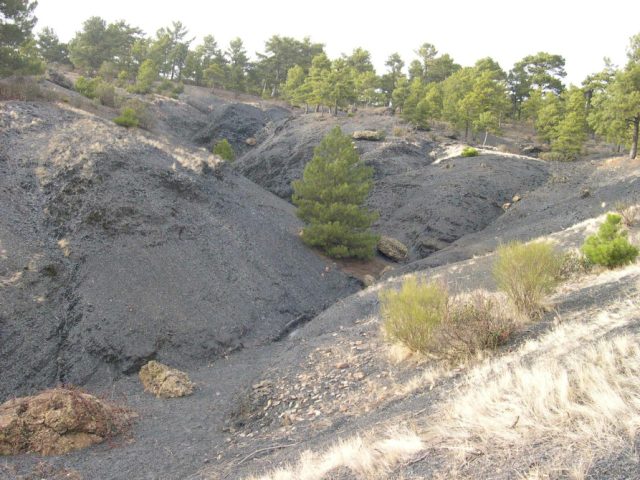
How to get there: From the town of Fuentelsaz itself it is easy to identify the place where the section is located, in a ravine northeast of the town.
Observations: This place is protected by regional and national legislation and the collection of fossils is not permitted. Its value is due precisely to the existence of an exceptional and continuous geological record, so that each fossil has scientific value for the information it provides, and not for its value for collecting. Respect this place, which is one of the great jewels of Spanish geological heritage.


 English (UK)
  Español