They are one of the most internationally relevant fossils that the Molina Region has. Their fossilization occurred due to a Hawaiian-type volcanic eruption, fissured and non-explosive, which covered them with a mantle of lava and pyroclasts. Its importance is due to several characteristics:…
View more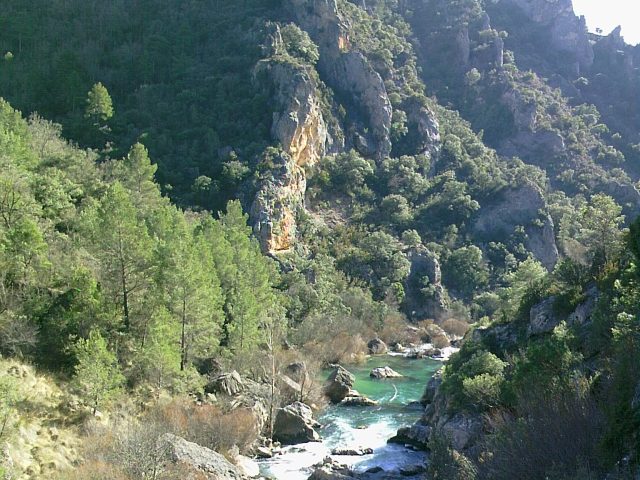
Pit with the greatest environmental wealth, its name is due to the rockfall caused by a strong earthquake with its epicenter in Portugal that occurred in the mid-16th century. This landslide created a natural dam on the Tagus River that reduced its flow until it was almost dry for a certain time. In this…
View more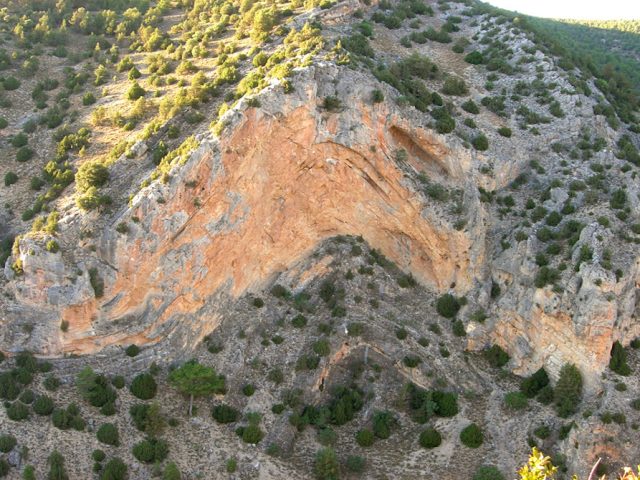
It is a place where all the environmental values that exist in the Molina Region are represented. We are going to highlight the following: Landscape value: The Triassic materials of the Buntsandstein Germanic facies offer attractive erosive forms among which the El Uso and La Tinaja tormos stand out, united…
View more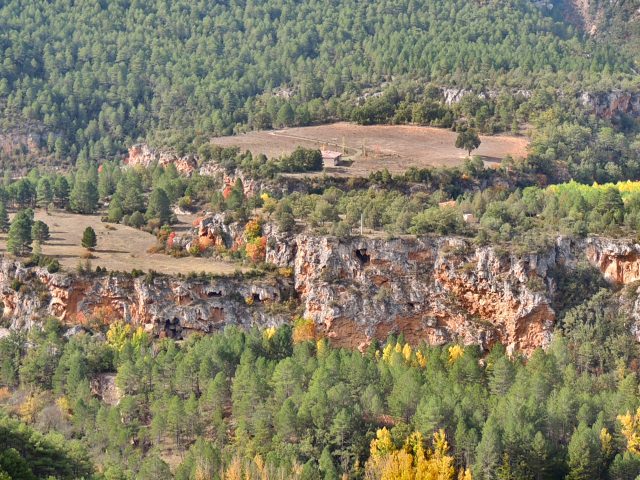
Description: The infiltration of rainwater in the plateau of the paramera generates upwellings on the slope of this area of the Tagus River canyon, at the outlet of which there has been an intense precipitation of carbonates during the last hundreds of thousands of years, the result is…
View more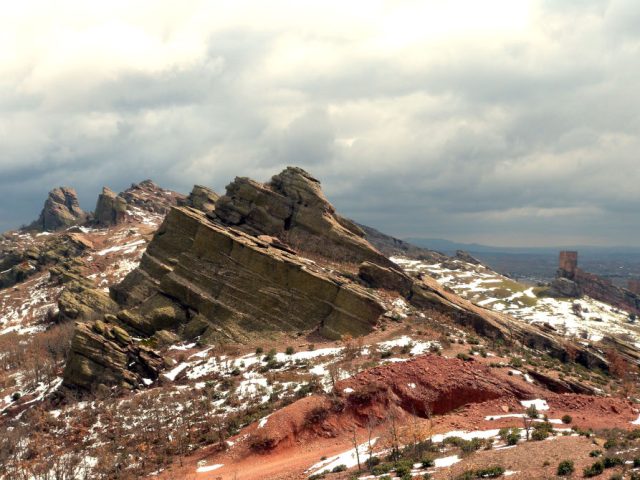
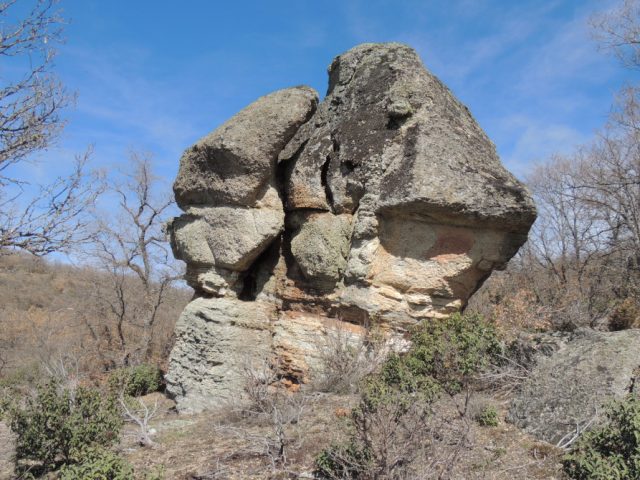
Description: The Sierra de Caldereros is an alignment of rocky ridges in an east-west direction in which the beautiful erosive forms that have developed on the materials of a monoclinal series from the Lower Triassic stand out: Tormos, fairy chimneys, fungiform rocks and caballeras , which together with…
View more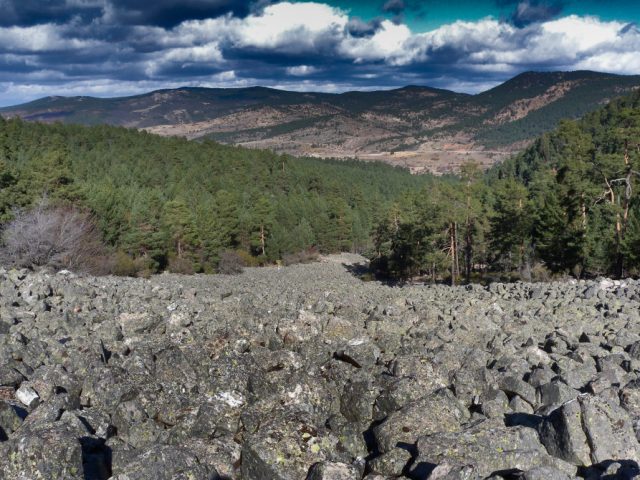
Description: The Orea stone river consists of an accumulation of stone blocks that occurs in some small valleys of the Sierra del Tremedal related to periglacial-type climatic conditions. These are accumulations of quartzite blocks of decimeter size, angular and unworked...
View more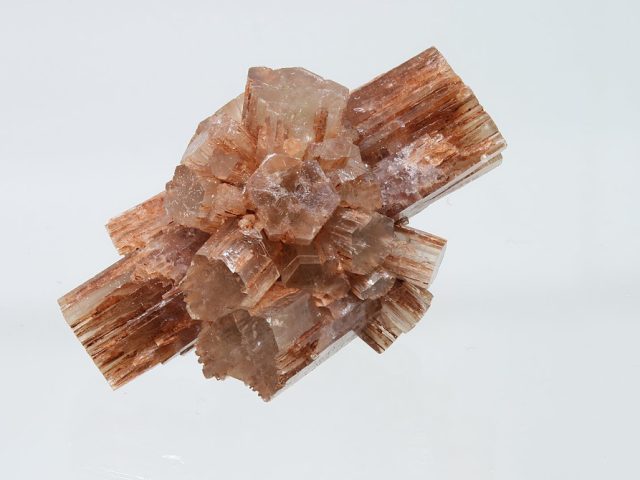
Description: It is a mineral formed by calcium carbonate (Co3Ca) crystallized in the orthorhombic system unlike calcite which, with the same composition, does so in the trigonal system, for this reason it was the first case of mineral polymorphism studied. The name is due to the German mineralogist…
View more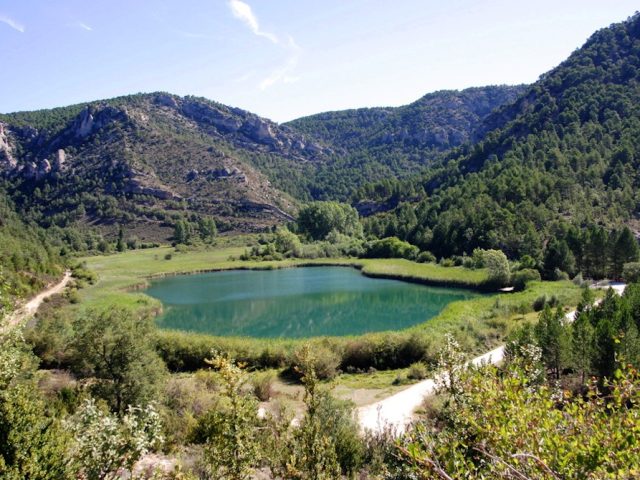
Description: This is a lagoon formed due to the damming of a karst spring due to the growth of a travertine building located halfway between the spring and the mouth of this spring into the Tagus River, a few hundred meters below. The spring is considerably stable…
View more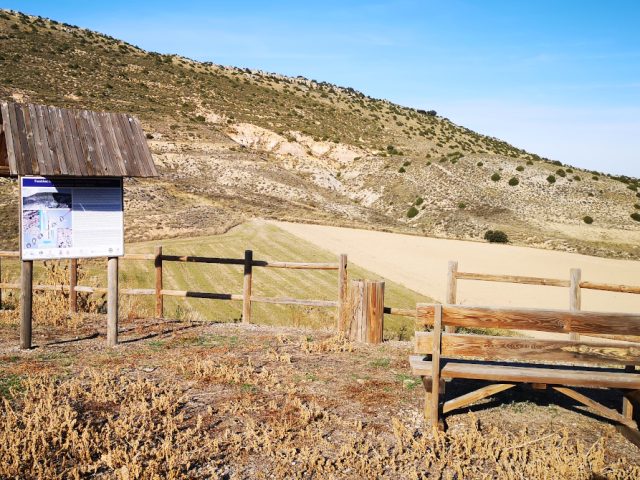
Description: The Fuentelsaz section, located in the NE region of the Señorío de Molina, is considered the most continuous record worldwide of the transit between the Lower and Middle Jurassic, around 175 million years ago. Geologists, to reconstruct the history of the Earth that goes back...
View more English (UK)
  Español