
Natural spaces
From Talavera de la Reina to Hellín, from Almadén to Molina de Aragón, Castilla-La Mancha appears flat and mountainous, dry and humid, high and low... The variety of environments is such that the surprising corners that a city treasures can be presented as countless. region that, due to its extensive nature, is not completely known.
A natural network that makes up a plural mosaic, full of open plains, abrupt and magical mountain ranges, valleys, rivers and lagoons, which accompanies our ancient cities and clean towns with diverse architecture integrated into landscapes of contrasts and unusual beauty.

It is an extensive natural space structured by the Tagus River and its headwater tributaries, in the heart of the Iberian System. Its exceptional environmental values and excellent state of conservation motivated its declaration as a Natural Park in 2000, over a territory of 105,721 hectares, covering 35 municipalities in the province of Guadalajara and 2 in the province of Cuenca. Added to this area are 70,000 hectares of the Peripheral Protection Zone, thus forming one of the largest protected natural spaces on the Iberian Peninsula. Gorges and rocks, river courses, forests and moors are the most representative ecosystems of the Natural Park, highlighting the great value of its geological elements, flora, fauna, exceptional landscapes and ethnographic elements.
More than three quarters of the natural space are covered by natural forests, among which we find valuable juniper forests and pine forests of Scots pine, laricio, rodeno and aleppo, as well as holm oaks, gall oaks and rebollares, with mixed hardwood and pine forests being very common. .
The various faunal groups are well represented in the Alto Tajo, highlighting the valuable communities of raptors that nest in the sickles and rocky cliffs: Bonelli's eagle, golden eagle, peregrine falcon, Egyptian vulture and griffon vulture, among others. Among the mammals, the presence of otters, martens, genets and Cabrera voles stands out, with herbivores being very abundant, such as deer, fallow deer, ibex and roe deer, and omnivores such as badgers and wild boars.
In 1992, the European Union began to develop a strategy known as the Natura 2000 Network, to conserve the continent's biodiversity, through the protection of natural spaces of great ecological value.
It consists of two types of protected spaces: ZEC (Special Conservation Area) and SPA (Special Protection Area for Birds).
Within the limits of the Geopark there are four other spaces of the Natura 2000 Network such as ZEC and SPA Alto Tajo; ZEC and SPA Parameras de Maranchón, Hoz del Mesa and Aragoncillo; ZEC and SPA Lagunas and Parameras del Señorío de Molina and ZEC Sierra de Caldereros.


The Geopark encompasses a Natural Park and several spaces included in the Natura 2000 Network, but there are also three protected natural spaces that have relevant importance. These are the Torremocha del Pinar Wet Meadows Microreserve, the Sierra de Caldereros Natural Monuments and the Fuentelsaz Stratotype Natural Monument.
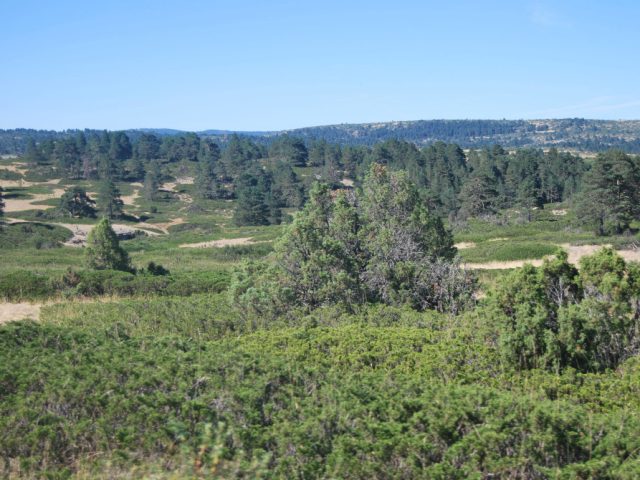
RN 2000 code: ES4240020. Name: Montes de Picaza. Province: Guadalajara. Extension: 15,103 ha. Municipal Terms: Alcoroches, Anquela del Pedregal, Megina, Pinilla de Molina, Piqueras, Prados Redondos, Terzaga, Tierzo, Torrecuadrada de Molina, Torremochuela, Traid. Characteristic habitat: pine forests, juniper forests, oak forests and mixed forests. Formations of creeping juniper forest. Shrub substrate: bushes, gorse, etc. Oromediterranean calcareous meadows. Substeppic areas of…
View more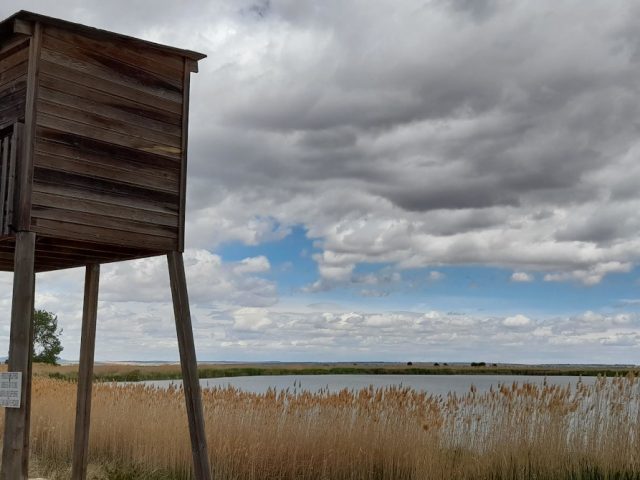
RN 2000 ZEPA and LIC code: ES4240023. Name: Lagoons and Parameras of the Señorío de Molina. Province: Guadalajara. Extension: 6,154 ha. Municipal Terms: Campillo de Dueñas, Embid, Molina de Aragón, Rueda de la Sierra, Tartanedo, Torrubia, Tortuela, La Yunta. Characteristic habitats: flora of temporary ponds, cushioned creeping scrub (cambronal), thymes, meadows...
View more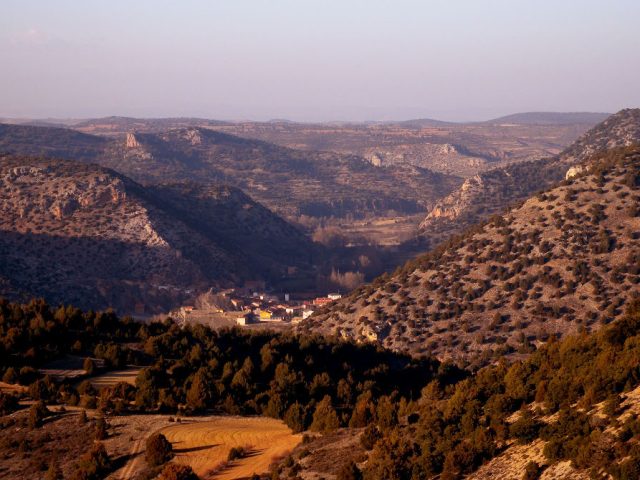
RN 2000 ZEPA code: ES0000094. Extension: 44,471 ha. RN 2000 LIC code: ES4240017. Extension: 49,442 ha. Name: Maranchón, Hoz del Mesa and Aragoncillo Parameras. Province: Guadalajara. Municipal Terms: Algar de Mesa, Anguita, Anquela del Ducado, Ciruelos del Pinar, Corduente, Establés, Luzón, Maranchón, Mazarete, Milmarcos, Mochales, Riba de Saelices, Selas,…
View more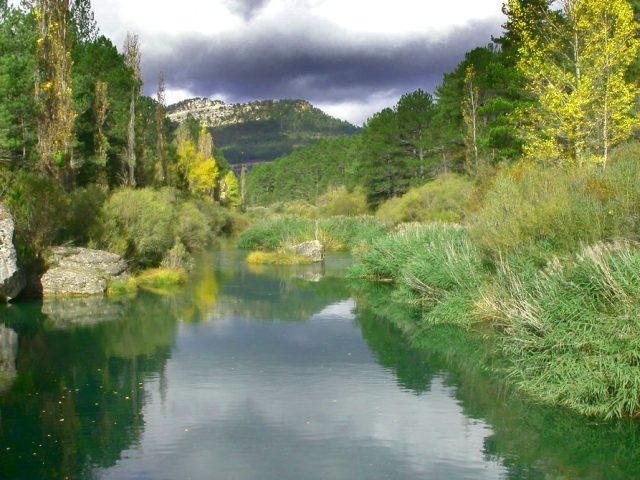
RN 2000 ZEPA code: ES0000092. Extension: 191,204 ha. RN 2000 LIC code: ES4240016. Extension: 140,068 ha. Name: Alto Tajo. Province: Guadalajara (40 municipalities) and Cuenca (6 municipalities). Municipal terms: CUENCA: Beteta, Carrascosa, Cuenca, Cueva del Hierro, Masegosa and Tragacete. GUADALAJARA: Ablanque, Alcoroches, Alustante, Anguita, Arbeteta, Armallones, Baños de Tajo, Cifuentes, Cobeta,…
View more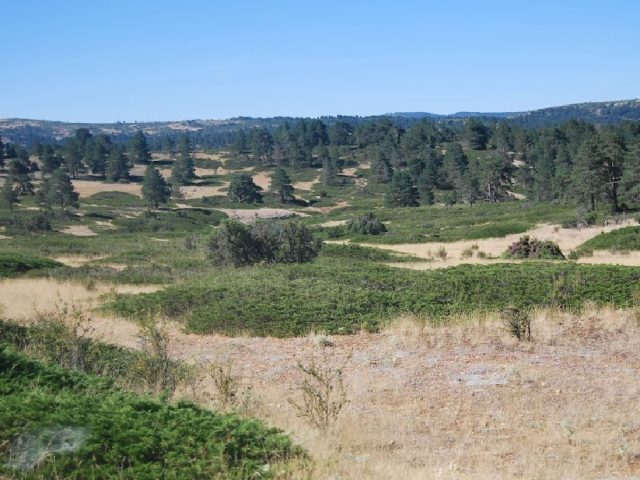
RN 2000 code: ES4240022. Name: Alustante Creeping Sabinares – Tordesilos. Province: Guadalajara. Extension: 7,376 ha. Municipal Terms: Adobes, Alustante, Orea, Tordesilos. Characteristic habitat: creeping juniper forests, oro-Mediterranean heaths and low paramera scrub. Calcareous alpine meadows. Endemic Mediterranean forests of Juniperus sp. Holm oak forests. Oak groves (rebolles and gall oaks). Outstanding values and species…
View more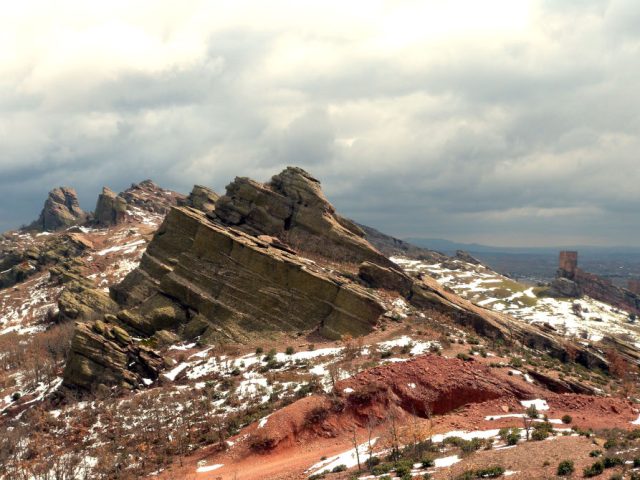
Description: The Sierra de Caldereros is an alignment of rocky ridges in an east-west direction in which the beautiful erosive forms that have developed on the materials of a monoclinal series from the Lower Triassic stand out: Tormos, fairy chimneys, fungiform rocks and caballeras , which together with…
View more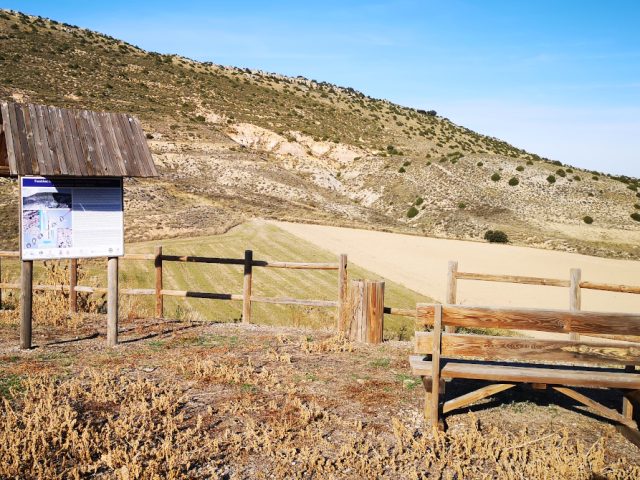
Description: The Fuentelsaz section, located in the NE region of the Señorío de Molina, is considered the most continuous record worldwide of the transit between the Lower and Middle Jurassic, around 175 million years ago. Geologists, to reconstruct the history of the Earth that goes back...
View more English (UK)
  Español