Investigation
Research has been and is a fundamental activity for the Geopark. We coordinate this activity to open new lines of work, bring together different disciplines, organize events and collect all the knowledge that is generated about our natural and cultural heritage. The Molina Alto-Tajo Region UNESCO World Geopark collaborates with different projects from different perspectives to promote research on those topics that we consider most interesting to enrich our interpretative discourse, such as those carried out on fauna and flora in the area's surroundings.
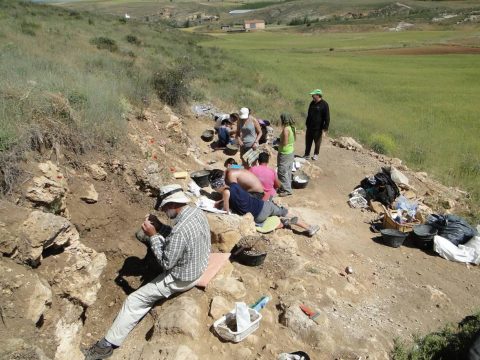
We highlight the work of valuation and mapping of the threatened paleontological sites of the Sierra de Aragoncillo, which include the Permian Fossil Forest and the Triassic ichnites, as well as the three excavations in sites with Cenozoic mammals in La Lomilla, Corral del Lobato and Molina de Aragon.
Another key point is the study and declaration of the Fuentelsaz Jurassic Limit Global Stratotype, as well as the cataloging of the Geopark's Places of Geological Interest.
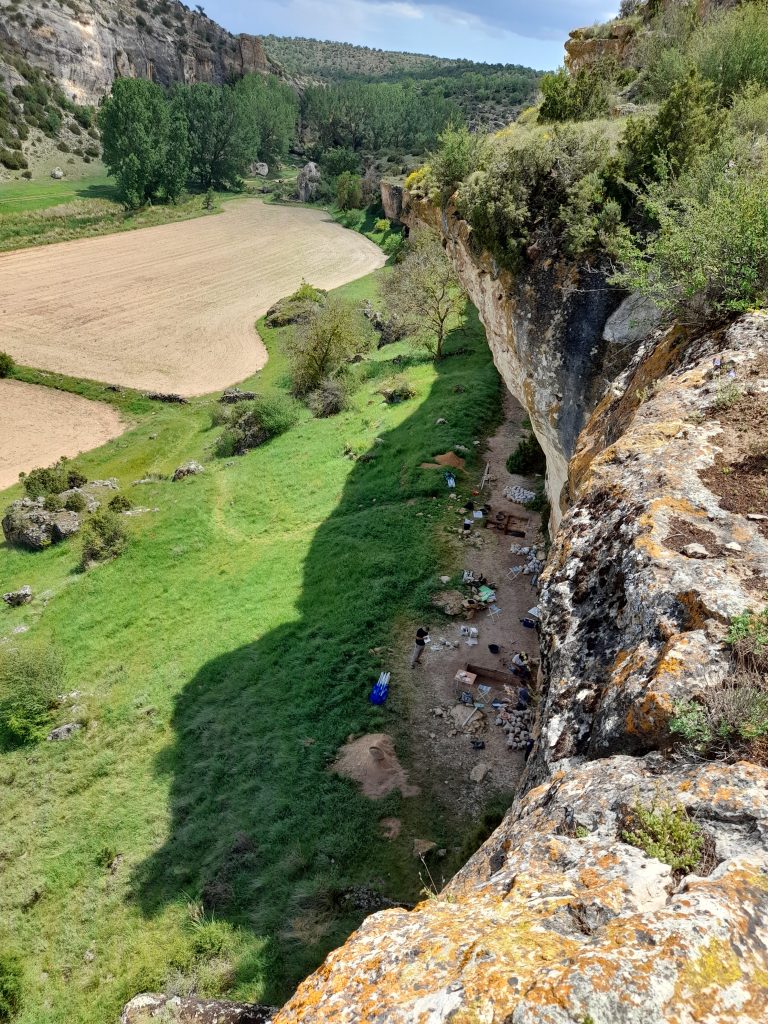
Research in History and Prehistory has a very extensive history and work is currently continuing on several sites. Some of the most notable are those referring to the Iron Age, with relevant sites such as El Ceremeño, Peña Moñuz, Los Rodiles or Castildegriegos.
The Paleolithic has recently been resized and there are open investigations in Charco Verde II (Embid) and the Cueva de los Casares, in addition to different projects in which the Geopark is directly involved through its researchers analyzing the human settlement during this period in collaboration. with UNED and the University of Alcalá de Henares.
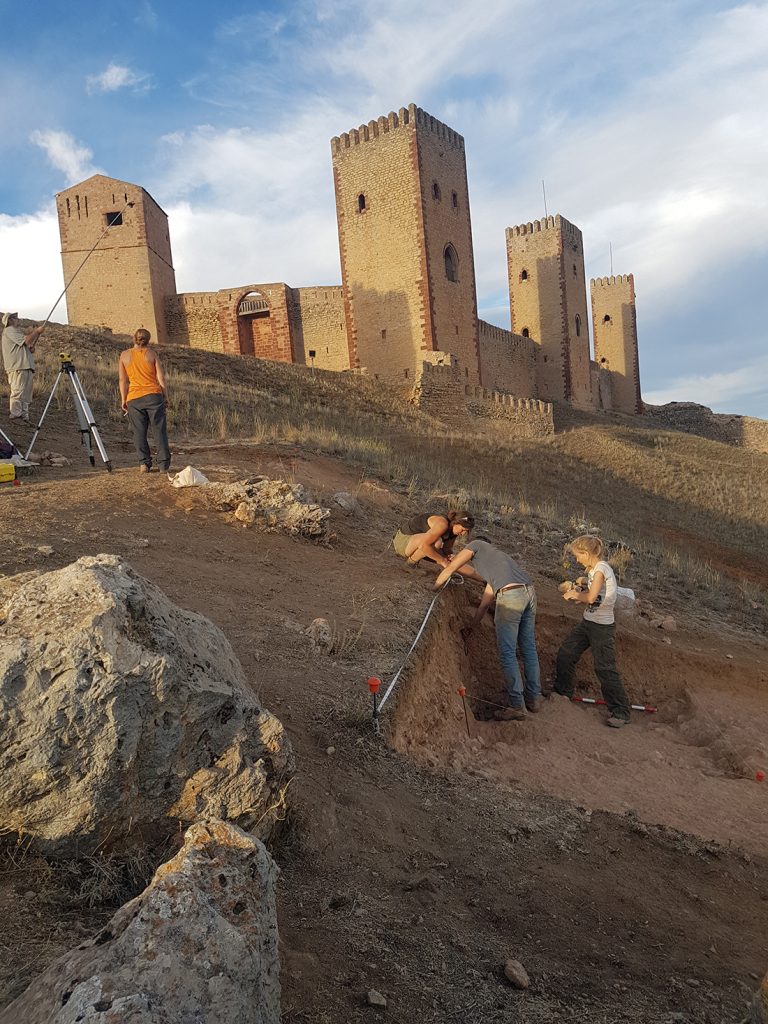
The work carried out by the University of Granada in collaboration with the University of Reading and the University of York through the project “Landscape of (Re)conquest: Multicultural Frontiers of southwestern Europe” is another element to highlight for the medieval period, joining to the research already carried out around the Prao de los Judíos in Molina de Aragón, or the Islamic site of Conjunto de Casares.
Divulgation
This research work must be transferred to society through informative projects, a fundamental axis of work in the Geopark. In addition to the numerous talks, presentations, conferences, courses and conferences, several publications have been made valuing its heritage resources.
- Geological guide to the Alto Tajo Natural Park
- Guide to fossils of the Molina-Alto Tajo Geopark
- Geology of Guadalajara
- Guide to Trilobites from the Middle Ordovician of Castilla-La Mancha and Extremadura
- I Guide to Singular Trees and Groves of the Molina de Aragón and Alto Tajo Region
- The Celtiberians in Molina de Aragón. The pre-Roman peoples of the eastern plateau
- The Celtiberian Castro of “El Ceremeño” (Herrería, Guadalajara)
- Origins and Evolution. An itinerary through the Molina-Alto Tajo Region Geopark.
-
¡Éxito rotundo en la XX Semana de los Geoparques Europeos 2026 en Molina-Alto Tajo!
-
XX Semana de los Geoparques Europeos 2026: Conecta Ciencia, Naturaleza y Comunidad en Molina-Alto Tajo
-
Muy buena participación en el Geolodía 2026 en el Alto Tajo
 English (UK)
  Español